Step one in my healing process was “DON’T MAKE IT WORSE.” It was going to be some time before I would be given any standard medical assistance, so I had six weeks to understand how I developed a tumor in the first place and what are the mechanisms that contribute to its growth. Once I found out that many cancers are metabolic (https://www.ncbi.nlm.nih.gov/pmc/articles/PMC3873478/), I was able to understand that I had control over whether or not the tumor would continue to grow and possibly spread. My first question was, what is feeding the tumor and how can I cut off the supply?
To find answers, I turned to the experts. And by experts, I don’t mean the people in white coats who play with test tubes and stare into microscopes all day. I looked for people who have had cancer and had success in reversing the symptoms (a.k.a. tumors) of a compromised immune system. Just to put it into perspective, in case anyone is wondering if it’s even possible, there are thousands of cases of people self-healing by changing their lifestyles. Some just change one thing, some change EVERYTHING, and the result is what the medical community refers to as “spontaneous remission” https://www.ncbi.nlm.nih.gov/pmc/articles/PMC8271173/. In other words, the body did what it is made to do and healed itself.
If eliminating sugar from the diet is a goal, I didn’t need to look any further than the ketogenic diet. The name comes from the process of eliminating/reducing the body’s primary fuel source, glucose, and forcing the body to convert to burning ketones for energy (source: Cleveland Clinic). There are additional benefits to this diet method. Switching to ketones also aids in the burning of fat cells. However, eliminating glucose from the diet only addresses one of the metabolic pathways. The traditional keto diet may not be sufficient to inhibit more than one pathway, as glutamine is another pathway that a tumor can utilize for survival. “Dietary sources of glutamine include plant and animal proteins such as beef, pork, poultry, milk, yogurt, ricotta cheese, cottage cheese, raw spinach, raw parsley, and cabbage” (source: Mount Sinai). Because meat, eggs, and dairy are high in glutamine, I decided to eliminate those foods from my diet as well. Thus, I began what I refer to as the Medi-Keto diet. Basically, a low-carb (no pasta) Mediterranean diet. The other pathways can also be affected metabolically and/or chemically, by using off-label medications as Jane McLelland did.
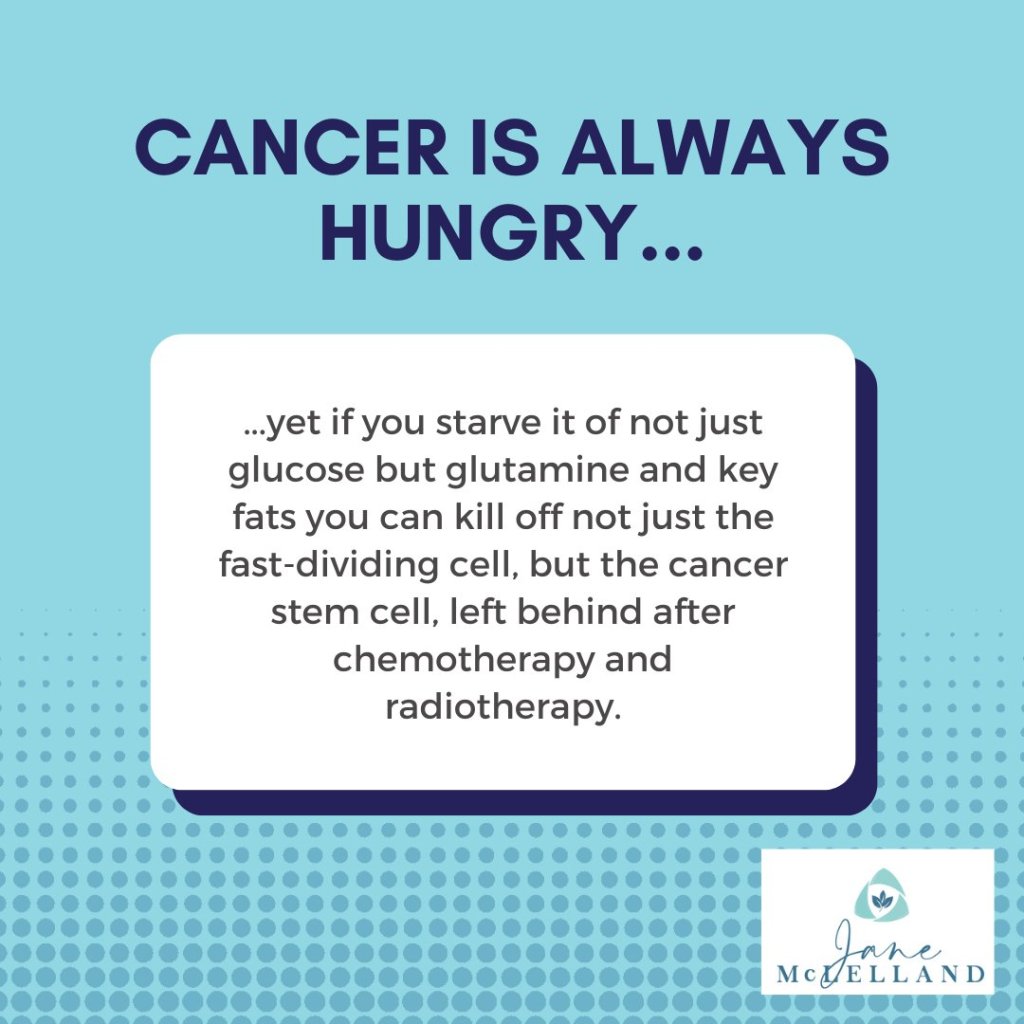
Several other lifestyle changes I adopted, thanks to the work of Jane McLelland, were: walking for 1/4 mile 15 minutes after every meal and doing squats to burn additional glucose, affirmations while walking, and drinking large amounts of green tea. I will write more in-depth about these in future articles. Jane’s book is a great starting point for many looking to find a different methodology than anything being presented by standard oncology in the West, especially if the person is facing Stage IV as Jane was. The metabolic pathway information allowed me to discover what makes a tumor grow and spread, while also providing the information that would be useful in inhibiting those pathways.
The chemical ability to block the metabolic pathways is discussed in great detail and is far too intricate to cover in a short article. The biggest takeaway from her research into off-label pharmaceuticals as metabolic inhibitors was finding that there are medical facilities doing active research into the effectiveness of these medicines. Care Oncology (https://careoncology.com/) is located in the US, so I gave them a call to arrange a consult. In the next article, I will discuss the medicines used in the protocol and my experience with their program.
 Dan's Cancer Healing Story: A Tale of Enlightenment