
Once I decided to take responsibility and control of my health, I needed to understand the most important steps to take in order to heal and prioritize my life to make sure those steps could be accomplished. Everyone has different demands on their time and energy, so this is the area in which there is the greatest variation in protocols. We can all eat the same foods. We can all get more exercise. We can all give up the things that are adding to our stress and depleting our immune systems. But exactly how much we are able, or willing, to do depends greatly on other factors. What I had to decide was if those other factors were going to get in the way of my healing. Since I viewed my circumstances as a matter of life or death, the decision was easy. If it wasn’t benefiting my mind, body and soul, then it had to go. NOTHING was going to get in the way of my recovery.
One of the most thoughtful gifts I ever received was from my brother. Soon after my diagnosis and even before my surgery, he sent me a juicer. My first reaction was, “Oh how nice, he thinks juicing is healthy.” At the time I was focused on eliminating the things that were causing me harm and had yet to investigate how others had gone about healing naturally. In the beginning, I was very much just running on intuition and making the changes that were immediate and that I knew had some sort of benefit.
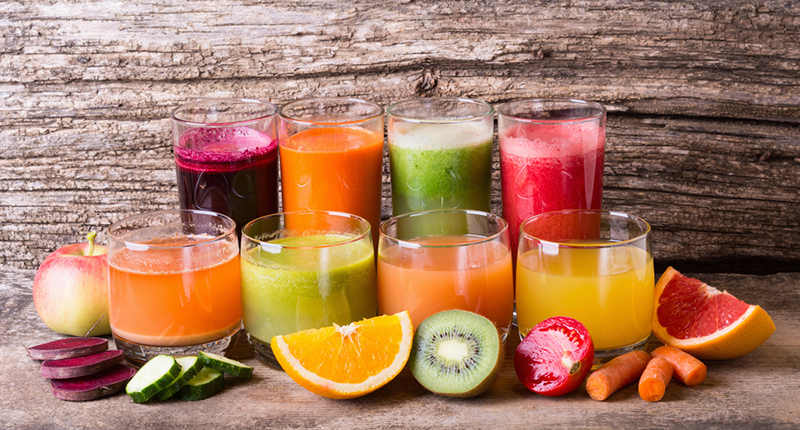
Coincidentally, one of the first testimonial interviews I listened to was that of someone who said they had healed themselves by juicing. Now, of course, we should all be aware that individual’s testimonies are not scientific by any means. When a person discusses the protocol that led to their recovery, they tend to talk about the changes they feel made the greatest impact and forget to mention ALL the changes they made in their lifestyle. So while someone may claim to have healed just from adding juice to their diet, there could possibly have been other factors that contributed to the outcome.
After much investigation, I decided that juicing would be a beneficial addition to my protocol. https://pubmed.ncbi.nlm.nih.gov/21864090/ The first juicing protocol I became aware of was just carrot juice. So that’s what I did. I began using the juicer my brother sent. It was a nice entry level model and did the job with adequate production and minimal cleanup. I drink 64 oz of juice every day. I drank one 8 oz. glass every hour for 8 hours a day. I continued this schedule for almost one year. It took a while, but eventually, my skin began to have that nice orange glow that comes with consuming large amounts of beta-carotene. https://www.healthline.com/health/beta-carotene-benefits
It’s easy enough to maintain a vigorous juicing schedule when you’re staying home all day and have the free time. But what happens when you have places to be and things to do. I found my self needing to supplement my juicing practice at time when I wasn’t able to devote the time needed. I occasionally relied on store bought juice to get me by for a day or two. While it isn’t as nutrient dense as fresh juiced, I felt it was better to get something inside me rather than go without. I think too many times people get discouraged when conditions are less than perfect. In my opinion, something is better than nothing, and as long as it isn’t harming me, it will do the job.
Once we returned home, I was able to resume a more disciplined schedule. As a result I developed some methods of producing a larger amount of juice at one time, saving me the trouble of preparing, juicing, and cleaning the equipment more than a couple times per week. I settled into a mixture of juices, powders, and other add-ons that became my foundational “recipe”. Here is the final result of my experimentation:
Nutrient Boost Daily Juice:
In the juicer:
- 3 Apples
- 3 Beets (with the greens)
- 4 lbs Carrots
- 3 thumbs Ginger
Add ons:
- 1 tsp each – matcha powder, ceylon cinnamon, amla powder, greens powder (or spirulina), moringa powder, mushroom powder, turmeric powder (w/a dash of black pepper)
- Cayenne pepper – to taste
If desired:
- 3 cloves garlic (minced)
- 1/4 cup Aloe Vera Gel
You can combine ingredients in blender and mix. I used an immersion blender in a large pitcher and that was my juice for the day. I was on this schedule for the first year and a half after my surgery. After that, I continued to drink juice every day, but only 3-4 glasses. I continued making the large batch and would refrigerate some and freeze some extra for later. I only had to juice once or twice a week, after that. Currently, I juice occasionally and will be incorporating it into my fasting protocol.
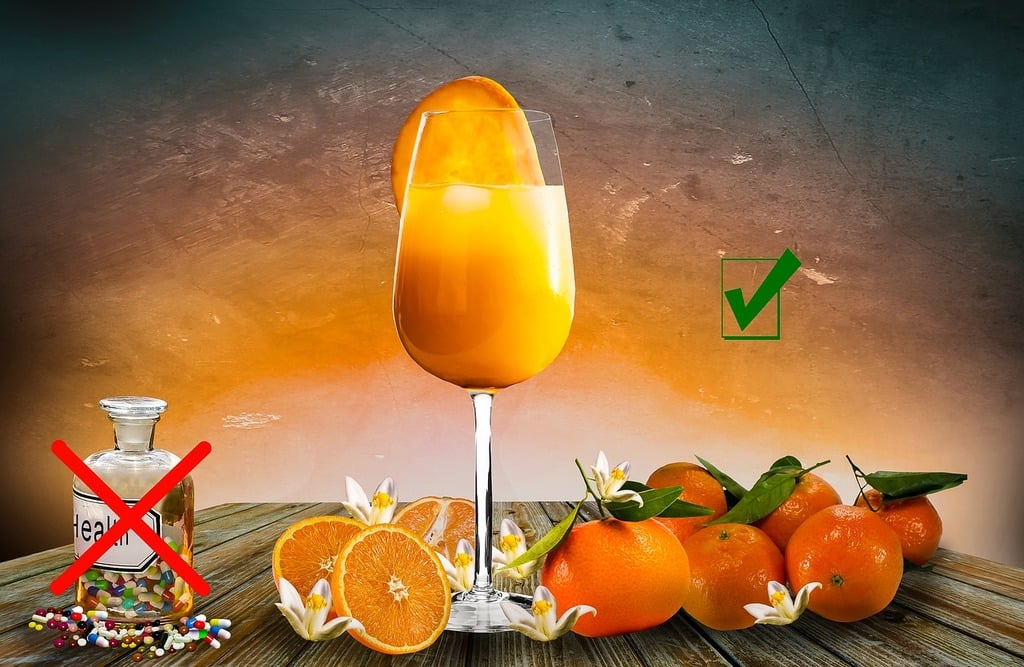
There is no doubt about the benefits of juicing. The key takeaway is that juice isn’t food. It is a supplement and should be utilized as such. The upside is that it is much more potent and more affordable than most organic supplements currently available. Not to mention, allowing first hand control over the ingredients. I would highly recommend, before considering investing money in a manufactured supplement, research the foods that have the needed nutrients, and stat juicing those foods, or add them to the current juice recipe. Give it time, see how it works, and maybe there will be maximum benefit with minimal expense.
Nutrition and Healing Benefits:
Apples:
- Vitamins C and B and minerals like Copper, Magnesium, Iron, Manganese, and Potassium.
- The vitamin C in apples also acts as an antioxidant to support immune function and fight cancer cell growth. In addition to preventing tumors, apples may also support cancer recovery.
Beets:
- Vitamin A, Beta Carotene, Thiamin, Riboflavin, Folate, Vitamin C, Vitamin E, Choline, Calcium, Copper, Iron, Magnesium, Phosphorous, Potassium, Selenium, Sodium, Zinc, Protein
- Beetroot and betanin, can be considered as strong chemopreventive agents that induce apoptosis and decrease cell proliferation, angiogenesis, and inflammation in skin, liver, lung, and esophageal cancers in experimental animals and cancer cell lines
Carrots:
- Vitamin A, Carotene alpha, Carotene beta, Lutein+zeaxanthin, Lycopene, Thiamine, Riboflavin, Niacin, Vitamin B6, Folate, Vitamin C, Vitamin E, Vitamin K, Choline, Calcium, Copper, Iron, Magnesium, Phosphorous, Potassium, Selenium, Sodium, Zinc, Protein
- Studies have shown that a daily intake of carrots can reduce the risk of colon cancer, lung cancer, and possibly pancreatic cancer and leukemia
Ginger:
- Calcium, Potassium, Vitamin C, Magnesium, Vitamin B6, Folate, Niacin
- Ginger and its active constituents suppress the growth and induce apoptosis of variety of cancer types including skin, ovarian, colon, breast, cervical, oral, renal, prostate, gastric, pancreatic, liver, and brain cancer.
Matcha:
- Matcha can considerably impact breast cancer cells’ survival, proliferation, antioxidant response, and cell cycle regulation
Ceylon Cinnamon:
- There is evidence that cinnamon extract (CE) has anti-proliferative effects against various types of cancer cells
Amla:
- Vitamin A, Thiamine, Riboflavin, Niacin, Panothenic Acid, Vitamin B6 Folate, Vitamin C, Vitamin E, Calcium, Iron, Magnesium, Phosphorous, Potassium, Sodium, Zinc.
- Studies show that Amla has a high antitumor effect, especially with certain cancers such as colon and lung cancer.
Spirulina:
- B complex vitamins, beta-carotene, vitamin E, manganese, zinc, copper, iron, selenium, and gamma linolenic acid.
- A human clinical study has shown that spirulina is effective in the prevention of oral cancerand breast cancer.
Moringa:
- Vitamin A, Vitamin B1, Vitamin B2, Vitamin B3, Vitamin C, Calcium, Potassium, Iron, Magnesium, Phosphorus.
- Lab studies show that moringa leaves, bark, and roots all have anti-cancer effects.
Mushroom Powder
- Five of the eight essential B vitamins, Ergothioneine, Vitamin D (when UV-B exposed), Beta-glucans, Selenium.
- Medicinal mushrooms have been used for hundreds of years, mainly in Asian countries, for treatment of infections, pulmonary diseases and cancer.
Turmeric:
- Manganese, Iron, Potassium, Vitamin C, Omega-3.
- Some lab studies have found it might work against lung, breast, prostate, and colon cancers.
Cayenne Pepper:
- Vitamin C, Vitamin E, Beta-Carotene, Choline, Lutein, Zeaxanthin, Cryptoxanthin (Vitamin A).
- Capsaicin has been shown to alter the expression of several genes involved in cancer cell survival, growth arrest, angiogenesis and metastasis.
Garlic:
- A small amount of Vitamin C, Zinc, Calcium, Iron, Potassium, Magnesium, Vitamin E, Vitamin K, and Manganese,
- Laboratory research shows that allium compounds in garlic offer anti-cancer activity.
Aloe Vera Gel:
- Vitamins A (beta-carotene), C and E, Vitamin B12, Folic acid, and Choline, Calcium, Chromium, Copper, Selenium, Magnesium, Manganese, Potassium, Sodium and Zinc.
 Dan's Cancer Healing Story: A Tale of Enlightenment