
After my diagnosis of Stage 3 CRC, I needed to take a long look at how I had been eating for the past few decades. I didn’t need to look very far or for very long to realize it wasn’t good. After eliminating all the food and drink from my life that were contributing to my declining health, I started adding healthier options. One of the first foods I began to consume on a regular basis was oatmeal (as it was the first meal of any day). There seemed to be a consensus among my physicians that an increase in fiber would be beneficial and oatmeal was an inexpensive and convenient way to get my daily allotment.
I began as most people with little to no experience in healthy eating would. I boiled some oats in the morning and added some fruit and cinnamon. That was it. I ate that version for a month or so, but as I furthered my research into nutrition, I realized I could take it up a notch (or ten). I began adding more powders and fruits. Eventually, I started using plant milks rather than water. From the outset, I had eliminated dairy as an option (more to come on that). After 6 months, I develpoed the anti-cancer oatmeal that I ate every day for two years. This is a spinoff of that recipe.
This recipe makes what I would consider two extremely generous servings. It can be divided as you like, depending on your nutritional needs and hunger level. Generally, oats should be soaked a minimum of 4-6 hours. Overnight soaking allows more nutrients to be absorbed into the liquid. I generally prepare my oats in the morning as I don’t eat this dish until lunchtime. Many of the ingredients can be prepped ahead of time and refrigerated for easy assembly at any time. It doesn’t have to be just for breakfast.
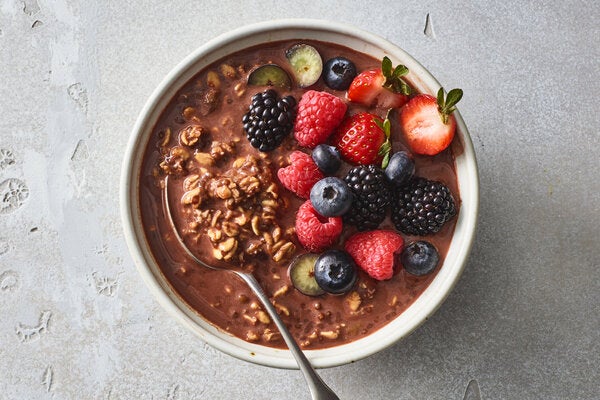
As with many recipes, ingredients can be swapped, depending on availability and budget. I use all organic ingredients. That is optional based on necessity, however, when it comes to produce, I generally practice if the peel stays on, it has to be organic.
Soaked Oats: Makes 2 servings
- 1 cup Rolled Oats
- 4 tbsp Goji Berries
- 2 cups Plant Milk* (See below)
Add Ins: per serving
- 1.5 oz Blueberries
- 1.5 oz Strawberries (diced)
- 1.5 oz Cherries (halved)
- 3 Whole Dates (sliced)
- 1/2 Banana (sliced)
- 1 tbsp Almond Butter
- 1/4 cup Granola
- 1 tbsp Cacao Powder
- 1 tsp Ceylon Cinnamon
- 1/2 tsp Mushroom Powder
*Cashew Milk – 1/2 cup of plain cashews and 1-1/2 cups filtered water in a blender. Blend until cashews are mostly gone. Pour directly over oats and goji berries (no need to strain as the cashew pulp contains beneficial nutrients and fiber).
Once oats have soaked and are ready to eat, simply add the add-ins of your choice and stir it all together for an amazing blend of flavors. Or, if you plan on posting a beautiful fruit forward pic on your platform, arrange the toppings as you like and impress your friends. If making the entire amount at once, the add in amounts above would simply be doubled.
There is a link above for a convenient way to purchase all the non-perishable ingredients. Below I will list the ingredients along with their nutrintional and healing benefits.
There is debate about the benefits and risks of eating oats. Whenever there is a conflict of opinion, i always look to real world examples to guide me. I the case of oats, I merely ask myself, are people who eat oats living longer, average or shorter lives. As far as I can tell, those who consume oats regularly end up on the average to longer end of the equation. I’ll take my chances.
Nutrition and Healing Benefits:
Sprouted Rolled Oats:
- Manganese, Phosphorus, Magnesium, Copper, Iron, Zinc, Folate, Vitamin B1 (thiamin), Vitamin B5 (pantothenic acid), Calcium, Potassium, Vitamin B6 (pyridoxine), Vitamin B3 (niacin)
- Whole grains like oats are loaded with fiber, antioxidants and phytoestrogens (plant-based compounds that have a slew of health benefits, including a lowered risk of osteoporosis, heart disease and breast cancer), all of which help protect against cancer.
Goji Berries:
- Vitamin C, Fiber, Iron, Vitamin A, Zinc, Antioxidants, all eight essential Amino Acids.
- Polish study of breast cancer patients indicated that consuming goji berriesinhibited the proliferation of cancer cells and increased anticancer activity.
Soy Milk:
- A cup of soy milk usually contains about 8 grams of protein and significant amounts of vitamins A, D, B1, B2, and calcium. The beverage also has omega-3 fatty acids.
- A higher intake of soy was significantly associated with a 10% reduced risk of cancer incidence.
Blueberries:
- Vitamin C, Vitamin B6, Vitamin K, Calcium, Iron, Potassium, Magnesium, Phosphorus, Zinc, Copper, Beta-carotene, Folate, Choline, Vitamins A and E, Manganese, Quercetin, Kaempferol, Myricetin, and Chlorogenic Acid.
- In recent years, many research results have shown that blueberry anthocyanin can inhibit the proliferation of cancer cells.
Strawberries:
- Vitamin C, Manganese, Folate, Potassium, Iron, Copper, Magnesium, Phosphorus, Vitamins B6, K, and E.
- They inhibit cancer cells’ growth and ability to spread and activate signaling that leads to the self-destruction of abnormal cells.
Cherries:
- Calcium, Phosphorus, Magnesium, Potassium, Vitamin C, Vitamin K.
- Many studies have found that the antioxidants found in cherries could help slow the growth of cancer cells.
Dates:
- Protein, Potassium, Magnesium, Copper, Manganese, Iron, Vitamin B6.
- Dried fruit intake is associated with reduced stomach cancer, pancreatic cancer, and colorectal cancer incidence.
Banana:
- Vitamin C, Riboflavin, Folate, Niacin, Copper, Potassium, Magnesium.
- A starch found in bananas can reduce some cancers by more than half, according to a 20-year trial.
Almonds:
- Protein, Fat, Vitamin E, Manganese, Magnesium, Copper, Vitamin B2 (riboflavin), Phosphorus.
- Studies have reported that almonds are especially high in cancer-fighting components that suppress cancer cell growth.
Cacao:
- Fat, Protein, Riboflavin, Niacin, Folate, Vitamin B6, Thiamin, Vitamin K, Pantothenic Acid, Vitamin E, Manganese, Copper, Magnesium, Iron, Phosphorous, Zinc, Potassium, Selenium, Calcium.
- Cacao extracts have been shown to have anticancer activity against human prostate, colon and adrenal cancer cells.
Ceylon Cinnamon:
- Calcium, Iron, Magnesium, Phosphorus, Potassium, Vitamin A, Vitamins B and K, Choline, Beta-carotene, Alpha-carotene, Beta-cryptoxanthin, Lycopene, Lutein, Zeaxanthin.
- Cinnamon has been extensively researched for its potential application in cancer prevention and treatment. It appears to be toxic to cancer cells, causing cell death, and reduces the growth of cancer cells and the formation of blood vessels in tumours.
Mushroom Powder (Blend):
- Protein, Calcium, Iron, Phosphorus, Magnesium, Potassium, Copper, Vitamin C, Niacin, Folate, Vitamin A, Beta carotene, Vitamin K, Thiamin, Riboflavin, Vitamin B-6.
- They have bioactive compounds used in cancer treatment due to their antitumor and anticarcinogenic effects.
 Dan's Cancer Healing Story: A Tale of Enlightenment